Book 2
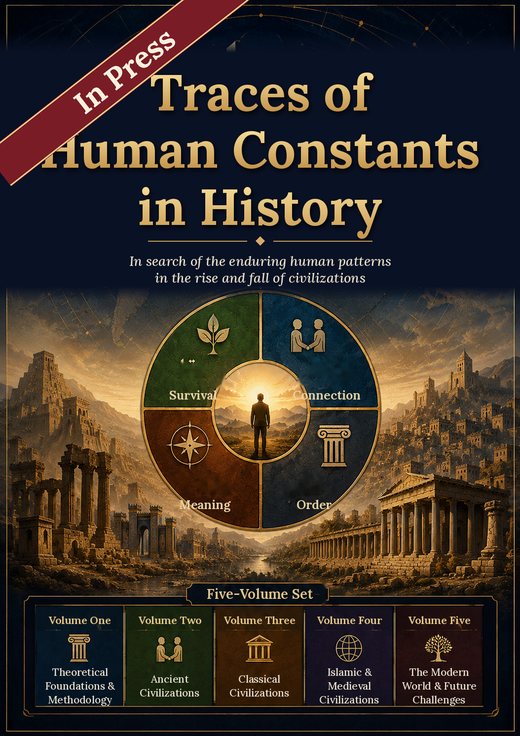
Traces of Human Constants in History
This work takes the theory from concept to measurement and application. It develops indicators and practical tools for researching human and social conditions through qualitative and quantitative methods.
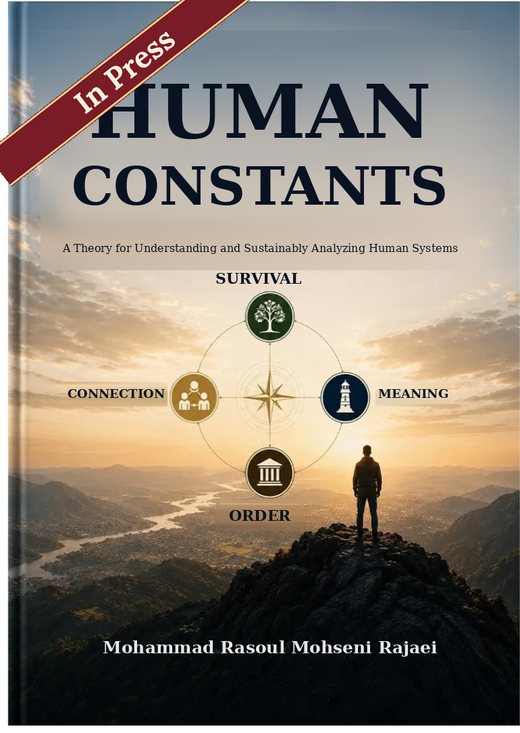
A theory for understanding and analyzing the stability of human systems
This book introduces the foundational concepts, central questions, and philosophical framework behind Human Constants Theory. It examines the four core constants (survival, connection, meaning, and order) through conceptual and analytical lenses.
This book takes the first step in presenting a coherent intellectual system: throughout history, human beings have sought a stable and meaningful existence. Human Constants asks why, despite cultural and historical differences, humans repeatedly return to shared patterns of survival, meaning, connection, and order.
In this work, the human constants are not presented as rigid laws, but as relatively stable and recurring patterns that decisively shape the individual and society. The book therefore takes a philosophical, interdisciplinary approach to connect human experience, history, and social structures.
No society is free from the basic needs of human beings. At every level of civilization, humans require security, belonging, meaning, and order. What distinguishes societies is the manner in which they respond to these needs. In some cases, this leads to stability; in others, it creates cultural and social crises.
The preface of this book is an invitation to re-examine our understanding of history, the individual, and society. I believe that any analysis of civilization is incomplete if it confines itself to the surface of history. We must reach the foundational layers of humanity to understand the larger currents of social life.
This book aims to demonstrate that despite their differences, human beings share deep foundational structures. Just as nature follows recurring patterns, human society also reproduces itself in response to certain enduring needs. This reality can help us interpret historical transformations with greater precision.
This work takes the theory from concept to measurement and application. It develops indicators and practical tools for researching human and social conditions through qualitative and quantitative methods.
A comparative study of the formation, growth, stability, and crises of civilizations, centered on the dynamic balance of survival, connection, meaning, and order.
An examination of the historical and geographical roots of the Middle East and the roles of resources, trade, migration, war, and civilizational interaction in shaping the region.
A historical and systemic account of state-building, modernization, development, and the political and social contradictions of Iran during the Pahlavi era.