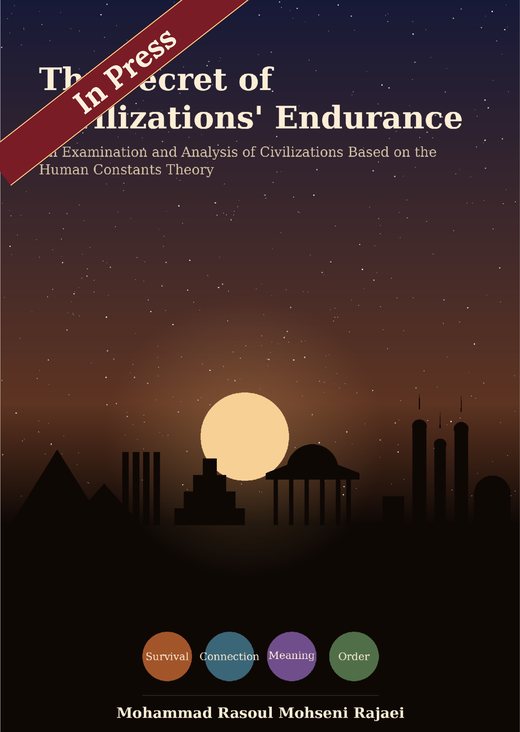
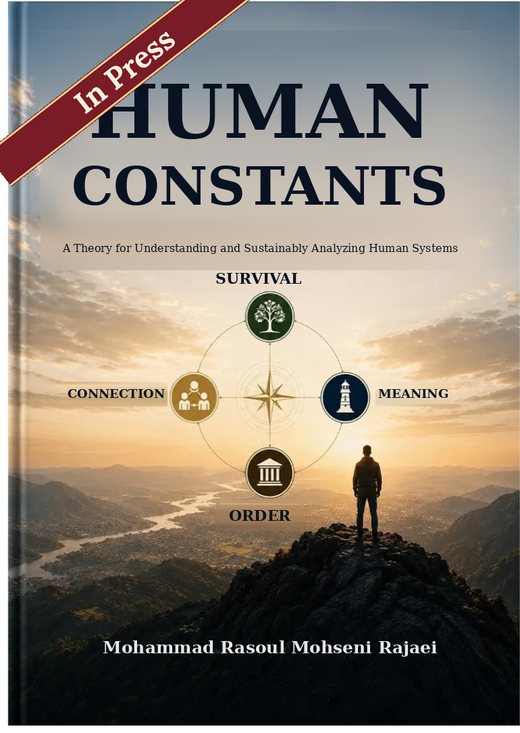
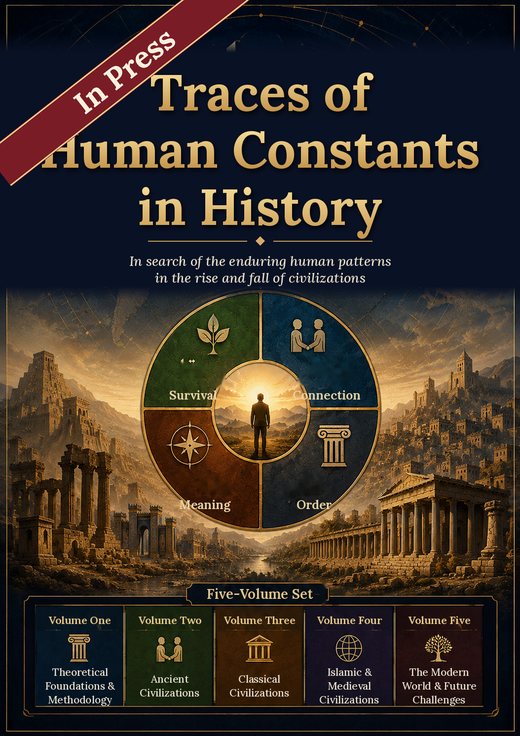
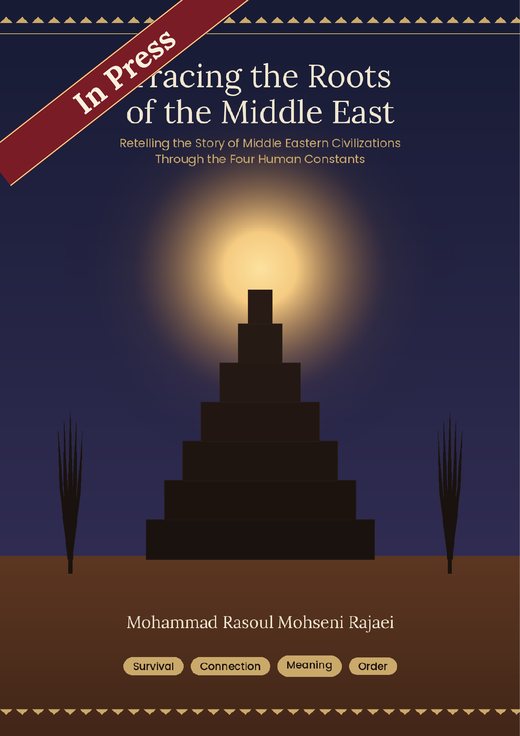
Introducing ‘An Analysis of Civilizations’
An Analysis of Civilizations is an attempt to study human civilizations comparatively and examine the factors behind their formation, growth, stability, crisis, and transformation.
Drawing on Human Constants Theory, the book understands civilization as the product of the interaction of four fundamental human needs: survival, connection, meaning, and order. In this framework, survival encompasses resources, economics, technology, the environment, and security; connection encompasses language, education, the transmission of knowledge, and cooperation; meaning encompasses values, beliefs, identity, and collective aims; and order encompasses laws, institutions, government, and social organization.
The book first examines major perspectives on civilization, from Ibn Khaldun and Spengler to Toynbee, Sorokin, Braudel, Marx, Weber, Durkheim, Diamond, and others. It then seeks to compare different civilizations through a shared analytical framework.
For each civilization, the historical realities (including geography, economics, social and political structure, culture, technology, foreign relations, and the factors of growth and decline) are first examined. The same evidence is then analyzed through the framework of the four human constants.
How do civilizations establish a balance among survival, connection, meaning, and order, and why do they lose that balance in certain periods?
The aim is not to prove the superiority of one theory over other theories of civilization, but to test whether the four human constants can reveal shared patterns across the histories of diverse civilizations.
Book Summary
‘An Analysis of Civilizations’ is a comparative study of the formation, growth, stability, crisis, and transformation of human civilizations. It rests on the premise that no civilization can be explained by a single factor. Geography, economics, culture, religion, politics, technology, the environment, and social structure all shape civilizational trajectories. Human Constants Theory seeks to bring these factors together within the four fundamental domains of survival, connection, meaning, and order.
According to this approach, a civilization is more stable when a dynamic balance exists among these four domains. A serious disturbance in any one of them can affect the others and create the conditions for civilizational crisis and transformation.
Ultimately, the book offers an analytical framework for the comparative study of civilizations, rather than a definitive or final answer about their fate.